
Designing the Protected Spaces: Where Healthy Home Design Lives Day to Day
By Natalie Biles, ASID · Co-Owner and Lead Designer, Shine Interior Design Studio
In our last journal post, my partner Stacey shared the three pillars of healthy home design she walked through at KBIS 2026: materials, zones, and air quality. Those three move the biggest levers and they protect the home from the inside out.
Stacey and I have been building this body of work together for years. I was on a similar KBIS NextStage two years ago in Las Vegas, on a panel called The Complete Healthy Home: How to Impact Your Clients' Vitality — alongside Anita Yokota, whose new book I'll come back to later in this post. The two of us approach healthy home design from different angles. Stacey leads with construction and materials; I lead with light, biophilic design, and the sensory experience of how a space feels across a full day. We land in the same place: protection is the foundation, not the finish.
Once those three pillars are in place, the question becomes: what are these protected spaces actually for?
That's the work I want to talk about today.
Look at the square footage you've protected
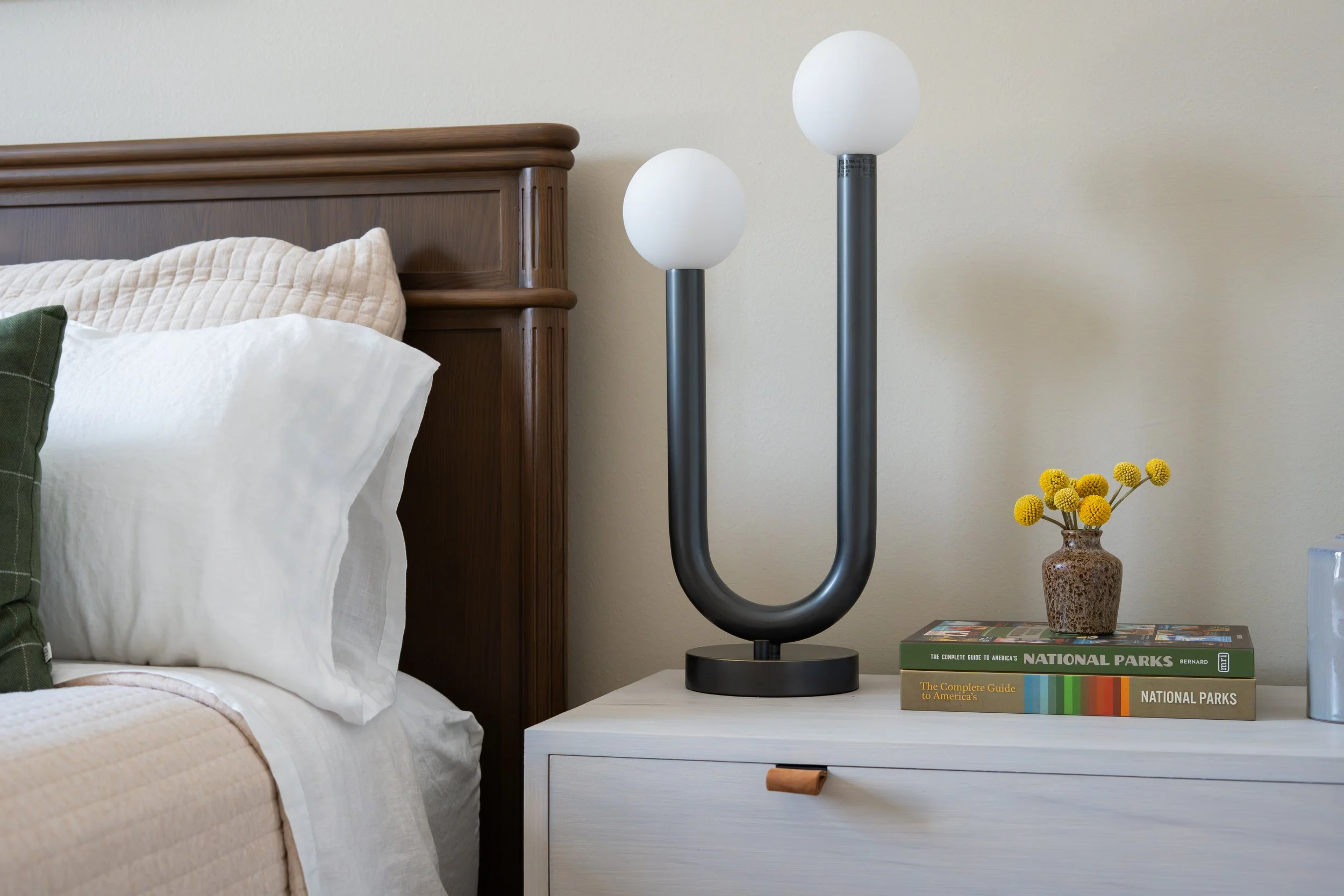
When we design a healthy home, the mudrooms, drop zones, and entry transitions do the heavy lifting of keeping the rest of the house cleaner. That leaves a meaningful amount of square footage — the bedrooms, the gathering rooms, the reading nook, the bath you actually retreat to — designed to do something different.
These are the spaces to gather, recharge, and rest.
They deserve their own design attention. The materials and the air may already be doing their job. The next layer is about how the spaces feel across a full day.
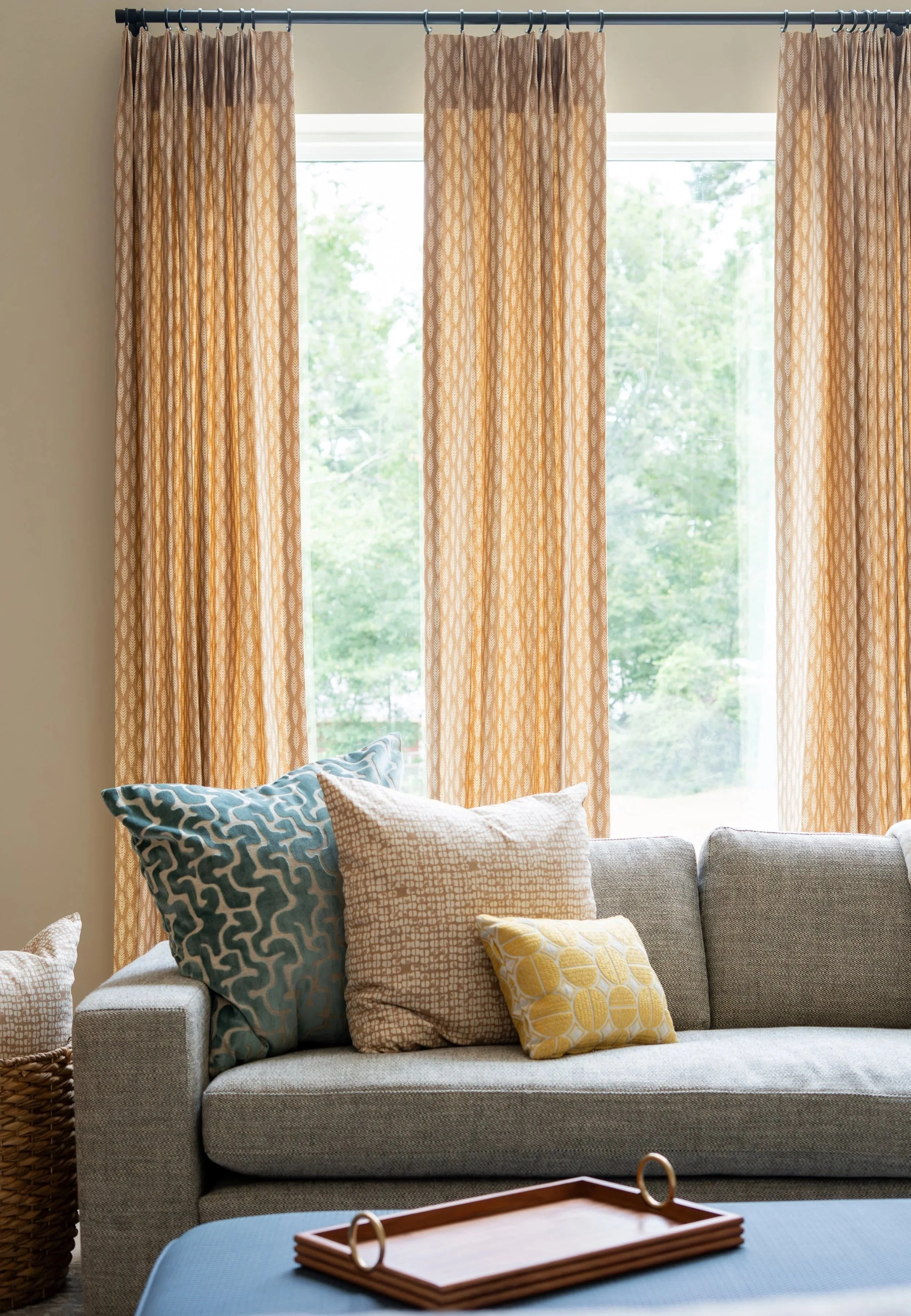
Daily Rhythms — windows, light, drapery
This is where window treatments stop being decoration and start being design.
Plan for windows, and layers of window shades and drapery, to set the tone for waking up, recharging, and winding down from the day. A morning room wants daylight that arrives in waves — sheer, then layered, then open. A bedroom wants the opposite: a way to dim down to true rest, then wake gently. A gathering space wants both — bright when people come over, soft and held when the day is ending.
Three things we think about when we specify window treatments in protected spaces:
Light layering. Sheers diffuse glare. Roman shades or roller shades give you privacy and dim. Drapery anchors the room and absorbs sound.
Material air-friendliness. Natural fibers like cotton, linen, and wool work harder for indoor air than synthetics. Oeko-Tex certifications are a useful filter when you're sourcing.
Operability. A drapery panel that's beautiful but never moves isn't doing its job. The treatment should be as easy to use as a light switch.
Furnishings and textiles that support clean air
Furnishings keep working long after the construction crew has left, and the materials choices made at the upholstery and bedding level either reinforce the air-quality work or quietly undercut it.
When the household is working at the kitchen island, playing on the family room rug, or sleeping in the primary suite, the textiles in those rooms are part of the air they're breathing. Natural fibers in upholstery, drapery, bedding, and pillows are some of the most reliable choices we make. Solid wood — especially found pieces or pieces from a local mill — does similar work for furniture.
When materials and environment hold up to all of that, the home stops being a backdrop and starts doing real work for the people inside it.
Seeing the work in practice
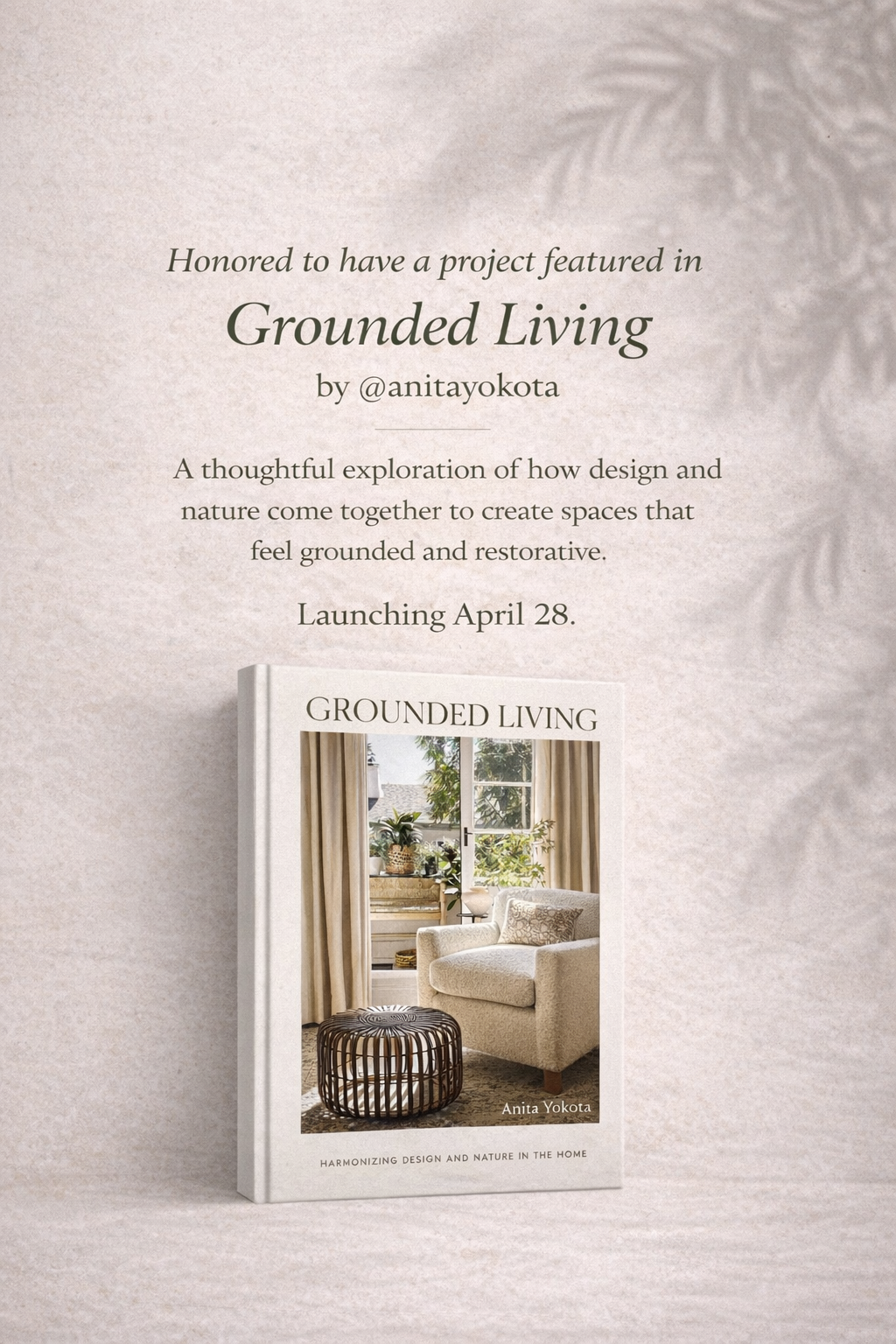
Two years ago, when I was on that KBIS Las Vegas panel about healthy home design, I shared the stage with Anita Yokota. Anita is a licensed therapist and a designer — her work sits at the intersection of how homes hold up emotionally and mentally, not just physically. We were talking about complementary versions of the same idea, and I've followed her work closely ever since.
Her new book, Grounded Living, is out now — and one of our Shine projects is featured as a two-page photo spread inside it. Seeing a project we designed using these exact principles — protected zones, layered light, natural fibers, careful materials — land in Anita's pages alongside her thinking is a moment we'll be celebrating for a long time.
If you want to see what these principles look like across a full collection of homes, the book is a good place to spend an evening.
How the framework holds together
The path we walk every client down looks like this:
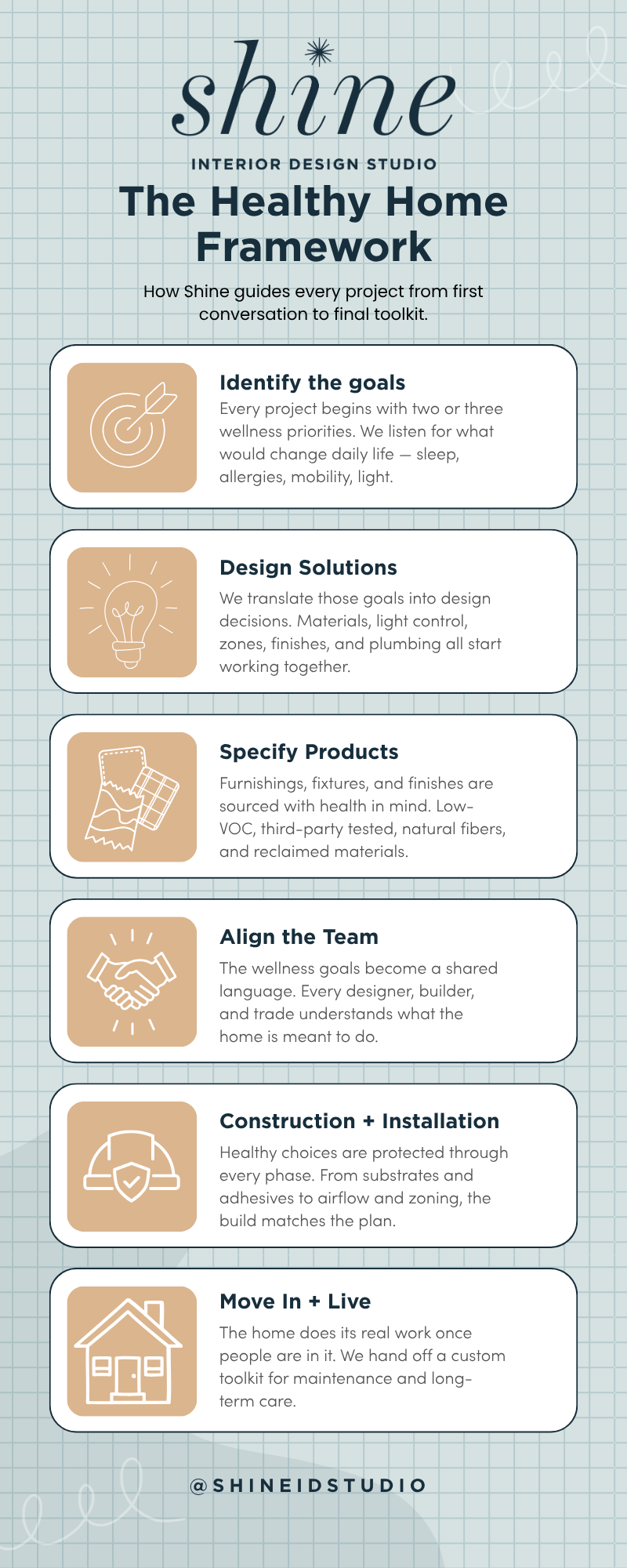
It looks linear on paper, but it really isn't. It's a conversation that loops back on itself as the project unfolds. What it does give us is a shared language between the client, the design team, and every trade on the job; so everyone is working toward the same end.
Most of the visible "design" — the protected spaces, the rhythm, the furnishings — happens at the top of the chart. But the wellness goals you set at the front of the project are what make the last steps work. The two sides are inseparable.
The toolkit at the end
When the project wraps, we hand each client a toolkit specific to their home — a PDF or binder with maintenance and cleaning guidelines based on the materials and furnishings we specified, so the spaces look beautiful and function well for the long term.
That toolkit isn't just for the client. It becomes a reference for our design team and the builders we work with, too — a standard we keep building on with each project. Each home teaches us something we carry into the next one.
What "wellness as the outcome" actually looks like
The pillars protect the home. The protected spaces give the household somewhere to live well inside it. The toolkit makes it last.
That's the full arc of what we mean when we say wellness as the outcome, making it a lifestyle and not a trend. It's not a single material, a single decision, or a single room. It's the design holding together across a full day, a full year, a full life inside a home.
As Stacey often puts it:
"The best place to start is a conversation about what wellness or sustainability means to you."
If you're thinking about a renovation or a new build, that conversation is where to begin. Two or three goals, written down. We'll meet you there.
If you'd like a practical place to begin, our free guide 10 Simple Design Swaps for a Healthier Home covers ten changes you can make in any home, at any stage of a project.

Natalie Biles, ASID, is an interior designer and co-owner of Shine Interior Design Studio in Lonoke, Arkansas. NCIDQ-certified and licensed since 2007, Natalie leads the studio's residential division and has been recognized as a 2025 Woman to Watch by Little Rock Soirée. She presented at KBIS NextStage Las Vegas in 2024 on the panel "The Complete Healthy Home: How to Impact Your Clients' Vitality," and was a guest on the Critical Conversations podcast (Episode 109: "Your Home, Your Health: Uncovering the Missing Piece in Wellness"). Reach her at natalie@shineidstudio.com.
Related reading on the journal:
Slow Design: Stacey's KBIS 2026 Talk — the three pillars (May 20)
10 Simple Design Swaps for a Healthier Home — Shine's free PDF guide
Wellness by Design: How to Introduce Healthy Home Principles to Clients — for designers, coming July 14
Design Grounded in Wellness and Sustainability — Stacey's editorial in Green Home Builder, April 2026 issue
Grounded Living by Anita Yokota — a Shine project featured in this new book on home, health, and emotional wellbeing